
Adani Enterprises, the flagship of Adani Group, said on Wednesday new businesses of renewables, data centres, airports and roads account for more than 33 per cent of earnings and it will complete all infrastructure projects on time. "We are laser focused on continuing our business momentum, in this market volatility. "We are confident in our internal controls, compliance and corporate governance.

Despite the recent turmoil in the Indian markets after a scathing report on the Adani group from Hindenburg Research, American private equity major Blackstone is "bullish" on the India growth story and plans to invest more in the country's infrastructure and real estate projects. "We have a long-term view on India, as growth will be higher here. We have invested half of our Asia exposure in India. "Our extraordinary performance in India has made us bullish," said Jonathan Gray, president and chief operating officer of Blackstone.
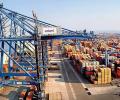
A day after the promoters of Adani Group prepaid $1.1 billion loans, one of the group's listed entities - Adani Ports and Special Economic Zone (APSEZ) - announced that it would prepay loans of up to Rs 5,000 crore by next month-end so as to improve its financial metrics. The company is targeting an earnings before interest, tax, depreciation and amortisation (Ebitda) of around Rs 15,000 crore this financial year. This was revealed by Karan Adani, chief executive officer (CEO) and whole-time director of APSEZ, while announcing the September-December 2022 results.

A slowdown in hiring by India's top IT companies has resulted in a sharp increase in the industry's profit per employee in Q3FY23. The top four IT companies earned a net profit of 1.7 lakh per employee during October-December 2022, up 8.6 per cent from Rs 1.57 lakh in Q2FY23 and 16.3 per cent from a record low of Rs 1.47 lakh in Q1FY23. Earnings per employee in the third quarter were, however, still down 0.9 per cent on a year-on-year (YoY) basis.

Among the many exits from the billionaire's club in 2022 are D Uday Kumar Reddy of Tanla Solutions (net worth down 66 per cent), Sushil Kanubhai Shah of Metropolis Healthcare (down 65.7 per cent), Vijay Shekhar Sharma of One97 Communications (down 66 per cent), and C K Birla (down 43.4 per cent).

Reliance Industries Limited (RIL) has been one of the top performing companies in the large cap space under the chairmanship of Mukesh Ambani and has beaten the broader market both in terms of earnings growth and shareholder returns. In the last 20 years, RIL's net profit has grown at a compound annual growth rate (CAGR) of 15.7 per cent while its net sales have grown at a CAGR of 15.1 per cent. RIL's net profit at consolidated level has jumped 18.5 times in the last two decades growing from Rs 3280 crore in FY02 to Rs 60,705 crore in FY22; its net sales grew 16.6 times from Rs 42,129 crore to Rs 6.99 trillion.
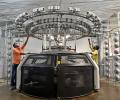
Manufacturing companies have been outperformers on the bourses in the current year, leading to a rise in their weighting in the benchmark index. Companies in sectors such as FMCG, automobile, pharmaceuticals, metals, cement, and agrochemicals now account for 25.43 per cent of the Nifty 50 index, up 88 basis points from 24.55 per cent at the end of December last year and a record low of 23.1 per cent at the end of CY20. The manufacturing sector is now dominated by FMCG majors such as Hindustan Unilever, ITC, Asian Paints, Nestle, and Britannia, accounting for 45 per cent of the combined market cap of all manufacturing companies in the index.

But the industry's chief executives remain confident of the long-term growth potential of NBFCs in India, given their specialised lending on the asset side, last-mile reach, and a well-capitalised balance sheet. "Over the years, NBFCs have faced many crises.

Banks are gaining market share at the expense of non-bank lenders such as housing finance companies, retail lenders, and those giving gold loans. There has been a steady decline in the market share of non-banking financial companies (NBFCs) in the credit market as banks have stepped up lending. NBFCs' share declined to a five-year low of 19.8 per cent in the first half of FY23, down from 20.3 per cent in H1FY22, and an all-time high of 23.1 per cent in H1FY19.

Aided by the $57.8-billion merger of HDFC Bank and HDFC, India Inc reported its highest ever mergers and acquisitions in calendar 2022 at $171 billion as against deals worth $145 billion announced last year. The acquisition by the Adani group across cement, media and ports dominated the headlines with the conglomerate making its foray into the cement sector by buying Swiss materials firm Holcim's stake in Ambuja Cements for $6.5 billion. The Adani family's additional $4-billion open offer for Ambuja did not get a response because shareholders preferred to stay invested with the new owner.

Adani Enterprises' proposed Rs 20,000 crore (Rs 200 billion) fundraising via fresh issue of equity shares through a public offer would be the fourth biggest by Indian companies, excluding banks and non-banking financial companies.

In a setback to Tata Power, the Supreme Court on Wednesday dismissed the company's challenge to the Maharashtra Electricity Regulatory Commission's (MERC's) decision to award a Rs 7,000-crore transmission project near Mumbai on a nomination basis to Adani Electricity. The court upheld the order by the Appellate Tribunal for Electricity (APTEL) in this case and directed all State Electricity Regulatory Commissions to frame guidelines on tariff determination in accordance with Section 61 of the Electricity Act and the national policy. The verdict has implications for the Mumbai power market, said Ashok Pendse, an energy expert based in the city.

All nine Adani stocks saw a rise in their share price in H1FY23, ranging from 6.1% in case of Adani Ports to 102% in case of Adani Power.

Foreign currency loans raised by Indian companies nosedived to $210 million in the September quarter (Q2), 93.3 per cent less than the year-ago period when five firms raised $3.1 billion. The Q2 amount is the lowest since December 2003 quarter when India Inc raised $191 million. Companies cited volatility in the currency markets, sharp rise in interest rates in the United States, and fund availability in India as the main reasons behind the sharp fall.

Gold prices are struggling and are down 18 per cent from their March highs. But stock prices have fallen even more. As a result, the precious metal has begun to outperform equities - both in the domestic market and international markets. Gold prices are up 2.6 per cent in the domestic market in the current calendar year (CY22) so far, according to the World Gold Council (WGC), compared to a 1.7 per cent decline in the Sensex year-to-date (YTD).

India's equity markets are on a roller-coaster ride, after delivering spectacular returns for two consecutive years - in 2020 and 2021. The benchmark National Stock Exchange's (NSE's) Nifty50 is down 1.5 per cent in the first nine months of the current calendar year 2022 (CY22) as foreign portfolio investors sold Indian stocks due to rising bond yields in the US and across global markets, including India. The sell-off in the Indian equity markets has, however, not been broad-based and largely limited to sectors facing earnings headwinds from rising interest rates, lower commodity and energy prices, and likely economic recession in advanced economies.

Fuelled by the $57.8-billion merger of HDFC twins (HDFC Ltd and HDFC Bank), M&A (merger and acquisition) transactions in India touched a record high of $124.2 billion in the first half of 2022-23. Bankers said with several transactions, including the government's stake sale in IDBI Bank and Hindustan Zinc in the pipeline, the ongoing financial year will end up as the best year for M&A activity in the country. Apart from the HDFC transaction, the $6.5-billion acquisition of Holcim stake by the Adani family and L&T's $3.2-billion acquisition of Mindtree added to the record transactions in the first half of FY23.

The Piramal group and Zurich Insurance have decided to jointly bid for Reliance General Insurance, a subsidiary of Reliance Capital. The groups had earlier submitted separate bids for the general insurance business of bankrupt Reliance Capital. Both Piramal and Zurich will hold 50 per cent each in the proposed special purpose vehicle (SPV).

The Tata group is planning to invest $90 billion in new industries such as mobile components plant, semiconductor, electric vehicles, batteries, renewables energy and e-commerce by 2027. The Tata group's investment in India is far higher than the $75-billion investments planned by Mukesh Ambani-owned Reliance Industries and $55-billion investment planned by the Adani group in the next five years in the country, the Economist reported recently. The investment by the Tata group is a shift in its strategy to focus more in the home markets instead of international markets where the group lost money.

The Adani group said Reliance Infrastructure, part of the Reliance Anil Dhirubhai Ambani Group, had initiated arbitration on one specific dispute under the Share Purchase Agreement (SPA) in December 2021 with a claim for just Rs 500 crore. Adani said it has filed counterclaims against the Ambani company. The Adani group firm, Adani Electricity was reacting to a Reliance Infrastructure statement of last week, which said it has filed an arbitration claim of Rs 13,400 crore against Adani Group in the Mumbai Centre for International Arbitration (MCIA). Reliance had cited a breach of a December 2017 share purchase agreement relating to the transfer of its Mumbai power distribution business to Adani Transmission.
